
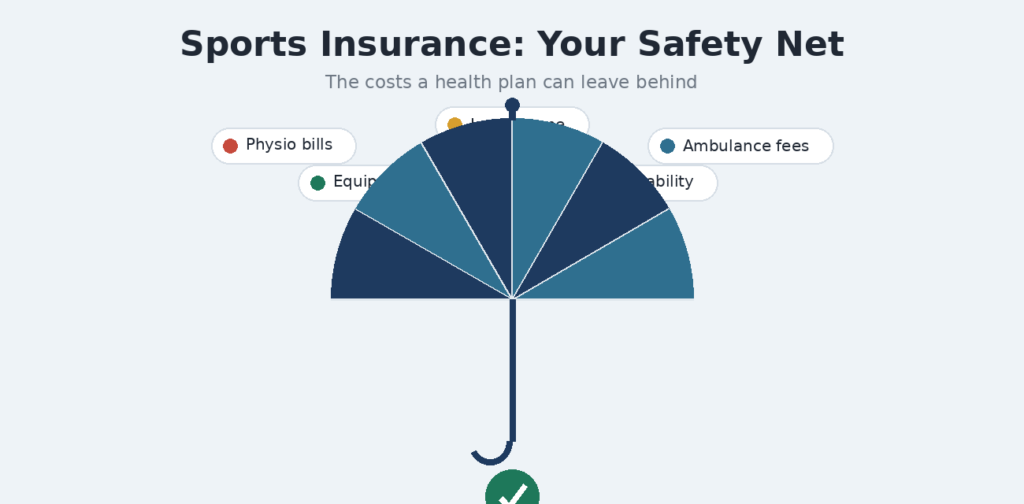
Sports insurance works like an umbrella, catching the costs a basic health plan can let through.
Plenty of casual athletes lace up each week without a second thought about coverage, right up until a twisted knee turns paperwork into a priority. Yet amateur sport carries genuine physical and financial risk, and a single awkward landing can lead to weeks of unexpected bills. This guide explains what sports insurance actually covers and helps recreational athletes decide whether a policy is worth it.
Amateur sport has never been more organised or more connected than it is today. Athletes track training on wearables, stream professional leagues, and follow the action through digital platforms and sportsbook brands such as Parimatch, all signs of how seriously recreational sport is now taken. That same professional mindset is exactly why financial protection, once an afterthought, increasingly belongs on an athlete’s checklist.
What Provincial Health Coverage Leaves Out
Provincial health coverage is generous but far from complete. It pays for emergency treatment, hospital stays, and doctor visits, yet it often stops short of physiotherapy, which averages roughly seventy-five to one hundred and fifty dollars a session across six to twelve visits. Ambulance charges, dental damage from a stray elbow, and income lost during recovery frequently land on the athlete instead.
How Common Are Amateur Sports Injuries?
Amateur sports injuries are more common than many players assume. Statistics Canada research indicates that about thirty-five percent of all injuries in the country happen during sport or exercise, and thousands of Canadians are hospitalised for sport-related injuries every year. Contact activities carry the highest risk, so members of football teams, hockey clubs, and american football sides tend to weigh protection most seriously.
Types of Sports Insurance Explained
Sports insurance is not a single product but a family of policies suited to different needs. The table below outlines the main options and the athletes each one tends to suit, from casual joggers to those who travel for competition.
|
Coverage type |
What it typically covers |
Best suited to |
|
Accident insurance |
Costs a health plan misses, such as physio and ambulance |
Most recreational athletes |
|
Disability or income |
Lost earnings while an injury keeps you off work |
Self-employed or sole earners |
|
Liability |
Harm or property damage a player causes to others |
Team-sport players and coaches |
|
Equipment |
Theft of or damage to expensive gear |
Cyclists and skiers |
|
Travel or competition |
Injury and cancellation at events away |
Athletes who travel to compete |
The main types of sports insurance and the athletes each tends to suit.
When Amateur Athletes Should Consider a Policy
Amateur athletes gain the most from a policy when their sport, income, or equipment raises the stakes. A demanding contact sport, freelance income without paid sick days, expensive equipment, or frequent travel to away fixtures each nudge the balance toward securing a policy. Casual, low-risk activity backed by strong employer benefits, by contrast, may need no extra policy at all.
Expert tip Before buying anything, athletes should map the coverage they already hold. Employer health plans, credit-card travel protection, and league membership sometimes include accident or liability cover, so checking first prevents paying twice for the same safety net.
Sports Insurance FAQ
A handful of questions come up whenever recreational athletes weigh whether sports insurance is right for them.
Q: Does provincial health insurance cover sports injuries?
A: It covers emergency and hospital care, but often not physiotherapy, ambulance fees, or lost income, which is where private cover helps.
Q: Is sports insurance worth it for casual athletes?
A: For low-risk, occasional activity with solid employer benefits it may be unnecessary, while higher-risk or self-employed athletes gain the most.
Q: Does a sports club automatically insure its members?
A: Some leagues include basic accident or liability cover, so athletes should confirm the details rather than assume they are protected.
Making the Right Call
Deciding on sports insurance comes down to honestly weighing risk, income, and the gaps a public health plan leaves behind. For many recreational athletes a modest accident policy buys real peace of mind, while others are already well protected and need nothing more. This guide is general information rather than personalised advice, so athletes should confirm their options with a licensed insurance provider before committing.