There was a time when eSports tournaments still had to introduce themselves to the audience. You would mention a big final, a sold out arena, or some ridiculous prize pool, and there was always someone nearby ready with the same slightly confused reaction. Wait, people really watch this? Is there actually money in it? Is this a real thing or just internet hype?
That line of thinking feels pretty old now.
Global eSports tournaments have grown way past the point of needing to prove they exist. They are full scale entertainment events with packed calendars, serious production, giant international audiences, and enough money flying around to make everyone pay attention.
The competitions feel more like proper world events now. There is more structure. More polish. More travel. More city hopping. More fan buildup. More reasons to care about what happens before the final and after it too. You are no longer just watching a few players sit down, click heads, lift a trophy, and disappear. You are watching a whole competitive world move around them.
That’s what makes the growth of global eSports tournaments so fun to look at right now. It is not one game that has a hot year. It is not one big organizer landing a lucky hit. Esports matches today feature a bunch of different titles, regions, and tournament styles all getting larger at the same time.
You can see it in giant international events like the eSports World Cup, which pushed prize money into blockbuster territory. You can see it in Riot’s long seasonal structure for games like VALORANT and League of Legends. Even Mobile eSports got into the spotlight.
So yes, eSports tournaments have grown, and some of them have absolutely exploded.
The Prize Pool Got Massive
Money changes how people look at things. Every ingredient might be there:passion, community, competition, and the beauty of elite level play, but the second a tournament starts throwing around seven figure prizes, people start treating it like a serious business.
That shift has been one of the clearest signs that global eSports has moved into a different tier.
The top end of the tournament scene now has real financial punch. Huge purses do not magically fix every issue in the industry, but they absolutely change the vibe. Players feel the pressure more. Teams take preparation more seriously. Sponsors see a bigger stage. Fans understand that these events are not just nice little celebrations. They are major battlegrounds. And some of the numbers now are wild enough that even people outside gaming notice.
The eSports World Cup raised the bar significantly this year, so other tournaments were under pressure to answer. The big tournaments in League of Legends, Dota 2, Counter Strike, VALORANT, PUBG Mobile, and Mobile Legends all benefited from that top level competition.
Prize money across the biggest global eSports tournaments now goes from $1 million and up.
And there is something else worth noticing here. The money is showing up across different types of events, not just one style. Some games still build everything around one historic championship. Others stretch importance across the whole season. Others go for giant multi title showcases that feel more like a summer sports festival with gaming keyboards.
It keeps the scene from turning into one repetitive copy paste version of itself.
The Season Barely Slows Down Now
One of the biggest reasons eSports feels more legit now is also one of the simplest. There is always something on.
Older versions of eSports often felt like they arrived in big dramatic bursts. A huge event would pop up, everyone would get excited, somebody would post a clip of a commentator losing their mind, and then things would go quiet again unless you were deep inside the scene already.
Now the biggest titles feel more like full year sports.
Riot has been especially good when it comes to packing their calendar. VALORANT, for example, now runs on a calendar that gives fans an actual season to follow rather than a random stack of disconnected events. There are kickoff stages, international tournaments, league play, qualification drama, and then the big final destination at Champions. That gives the whole year structure. It gives teams arcs. It gives fans something to track beyond a single trophy lift.
Counter Strike takes a different route with the same results. That scene is constantly moving. One LAN ends and another is already warming up. There is always another bracket that can shake up the rankings, another arena where a top team can fall apart, another week where some new roster suddenly looks terrifying. It has a restless energy that works really well for a global audience.
The busy calendar does more than just entertain people. It helps the whole industry feel sturdier. Teams can stay visible. Sponsors have more moments to attach themselves to. Tournament brands become recognizable. Fans build habits. Players become part of an ongoing story instead of just names attached to one famous weekend.
eSports is not only producing bigger events. It is producing more continuity.
The Map Got a Lot More Interesting
The map of tournaments used to be limited. South Korea. China. Europe. North America. End of story.
The modern tournament map is much broader, and the scene is better for it.
Big events now land in more places and feel tied to more regions. Riyadh has become one of the biggest homes for giant international competitions. Shanghai keeps showing up on the calendar for major Riot events. Bangkok has hosted major mobile championships. Europe is still one of the natural homes of Counter Strike. North America remains a major stop for plenty of big events. The whole thing feels more spread out, which makes it feel more global in a real way, not just in branding. Different cities bring different forms of energy.
A giant crowd in one country does not sound like a giant crowd somewhere else. The chants are different. The reactions are different. The star power lands differently. Some places feel serious and high pressure. Some feel chaotic. Others feel like a home crowd trying to carry a local favorite. All those different vibes give the calendar a lot of personality.
And that wider spread also makes the whole scene feel less fragile. When big tournaments are tied to more than one region, the industry feels bigger, more important. It feels like it has options. It feels like it can keep expanding instead of circling the same few locations forever.
Plus, from a fan perspective, it is just more fun. The idea of eSports as a world tour makes more sense now because it actually looks like one.
Mobile eSports Made The Scene Much Bigger
Reading the headlines it’s easy to get wrapped up only in the main events. You might think everything revolves around PC giants like Counter Strike, VALORANT, League of Legends, and Dota 2. Those games are absolutely massive, no question. But they are not the whole story.
Mobile eSports has played a huge role in the growth of global tournaments, and at this point it deserves way more respect than it sometimes gets.
In a lot of regions, mobile gaming is not the younger cousin of major tournaments. It is the main thing. It is more accessible, more widespread, and much closer to everyday life for millions of players and viewers.
Titles like Mobile Legends and PUBG Mobile have shown just how big these scenes can become. Their global events pull serious numbers, serious fans, and serious stakes. And because mobile gaming reaches people in different ways than PC gaming does, it helps make the overall eSports scene feel less boxed in.
That is a huge part of why tournament growth feels so global now. It is not only that the old PC scenes got richer and more polished. It is that entirely different gaming communities came charging in with their own audiences, their own stars, and their own major events.
Basically, mobile did not just join the party. It brought in a huge new crowd.
Tournaments Finally Learned How to Put on a Show
Early eSports had plenty of charm but not enough attention from the public. Some tournaments looked rough. Some of them were slapped together. Some had the production energy of a school project.
That’s not where the best events are anymore.
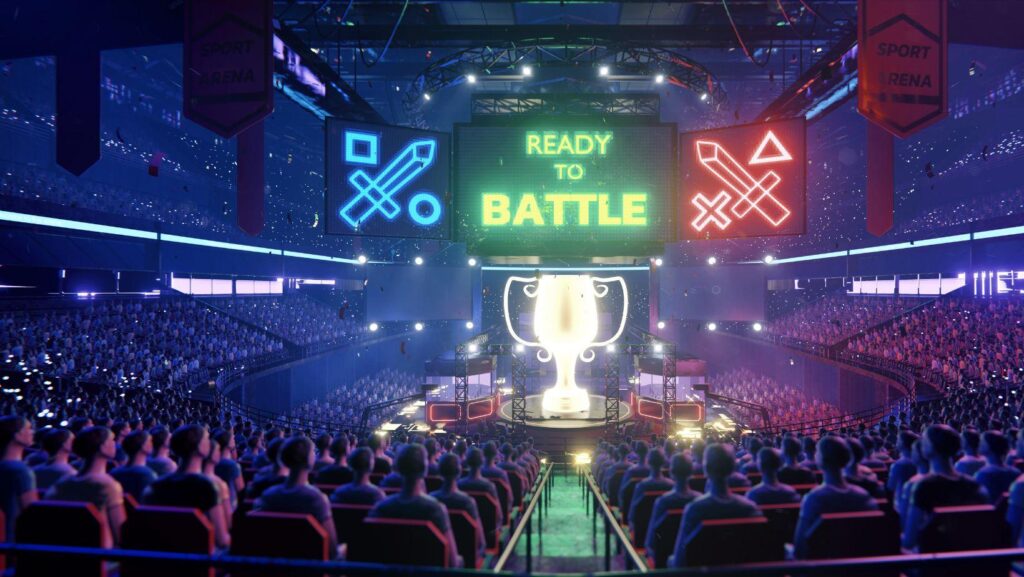
The top global tournaments now understand that fans want more than elite gameplay. They want a spectacle. They want a sense that this event means something. They want a stage that looks expensive, a crowd that sounds huge, and an atmosphere that feels different from a random online qualifier.
Riot has been one of the strongest at this for years. Its biggest events know how to build hype. The music, the visuals, the intros, the branding, the local flavor, the whole polished machine of it all. Even people who do not play the games can usually tell these are not low effort productions.
Counter Strike, in its own way, has also gotten really good at making LANs feel like real occasions. A big arena playoff in CS does not need much help because the game itself already creates tension, but the best organizers now know how to build that tension properly. The match feels big before it even starts.
And then you have huge multi title events that go for scale and festival energy. That creates a different kind of appeal. Instead of one game trying to dominate the weekend, you get this broader celebration of competitive gaming where different communities all collide in one place.
The fact is that eSports tournaments are growing beyond their older audience. Polished events are easier to sell. Easier to stream. Easier to sponsor. Easier to host. Easier to remember. Fans come back for tournaments that feel special, and organizers are finally much better at making “special” look real.
Teams Also Had to Grow Up
The tournament boom did not only affect fans and organizers. It also pushed teams into a more demanding world.
Back when the scene was smaller and patchier, an organization could sometimes survive on vibes, a decent logo, and one lucky run. That gets harder when the global calendar is packed and the biggest tournaments carry real pressure.
Now teams have to think bigger. They have to manage longer seasons. They have to travel more. They have to support players through more intense schedules. They have to build proper coaching staffs, analysts, performance teams, and all the stuff that starts making an organization feel like a real competitive operation rather than a cool hoodie brand with a Twitter account.
Not every team has figured that out, obviously. eSports still has plenty of financial struggles floating around. But at the very top, you can feel the difference. The best clubs are not only trying to win one tournament. They are trying to stay relevant across whole seasons, sometimes across multiple titles at once.
That multi title ambition is a big part of the current era too. More organizations want to be known as major eSports clubs full stop, not just as some team that is good at one specific game.
Mainstream Attention Is No Longer Optional
At this point, mainstream sports and media do not really get to shrug off eSports anymore.
They can still be late to things. They can still misunderstand parts of the culture. They can still occasionally write about gaming, as they have just stumbled upon an alien civilization. But the biggest tournaments are too large now to be ignored completely.
Once major events start pulling huge audiences, filling big venues, attracting major investment, and getting linked to international sports bodies and host city ambitions, the dismissive jokes lose some of their punch. You don’t have to love eSports to see that it’s a real force now.